


Learn What WMS Is and What It Means for Your Business
Incorrect warehouse management, limited inventory control, and little or no process automation can directly reduce profitability. With PULPO WMS, companies create a digital twin of their warehouse, streamline warehouse operations, improve inventory accuracy, and gain the transparency needed to make smarter operational decisions.
Definition of a Warehouse Management System
Understand what WMS software does and why it plays a central role in modern warehouse operations.
InventoryWhy Inventory Management Needs a WMS
See how a WMS improves inventory tracking, inventory accuracy, and real-time inventory visibility.
CompareHow to Compare WMS Providers
Learn which factors matter most when evaluating warehouse management software for your business.
A Warehouse Management System, or WMS, helps businesses bring structure, visibility, and control into their warehouse operations. Whether you run an eCommerce warehouse, a 3PL operation, a distribution center, or a growing fulfillment center, the right warehouse management system can help you optimize warehouse operations, reduce manual errors, and send more orders in less time.
With PULPO WMS, businesses create a digital twin of their warehouse and connect people, inventory data, warehouse locations, and daily warehouse operations in one controlled workflow. This makes it easier to manage complex warehouse workflows, improve operational efficiency, and create more reliable supply chain operations.
Warehouse Management System Definition
A Warehouse Management System is smart warehouse management software designed to control and optimize daily warehouse operations. It supports the complete movement of goods inside a warehouse, distribution or fulfillment center, from inbound receiving to putaway, inventory tracking, picking, packing, shipping, returns, and stock adjustments.
Modern WMS software manages tasks such as incoming goods, storage allocation, warehouse locations, serial number and lot number tracking, best-before-date management, order management, cycle counting, real-time tracking, labor management, and order fulfillment.
A modern WMS also connects with ERP systems, eCommerce platforms, marketplaces, shipping tools, transportation management systems, and other supply chain systems. This gives companies real-time visibility across inventory, orders, warehouse data, and supply chain processes, helping them improve operational efficiency across the entire fulfillment workflow.
Why Inventory Management Needs a WMS
Many businesses start with basic inventory management tools, spreadsheets, or the inventory features inside their ERP or store system. While this may work at an early stage, it often becomes difficult to scale when order volume grows, warehouse workers increase, or multiple warehouses are added.
Inventory management tells you what stock you have. A WMS shows you where that stock is, how it moves, who handled it, and what needs to happen next.
That difference matters. A modern WMS improves inventory tracking, strengthens inventory control, and keeps inventory data accurate across all warehouse locations. With real-time inventory visibility, warehouse managers can avoid stock discrepancies, reduce overselling, improve customer satisfaction, and make better decisions based on actual warehouse activity.
For companies managing fast-moving products, multiple sales channels, or complex warehouse workflows, a WMS becomes the operational layer that keeps inventory, people, orders, and systems connected.
Digital Twin for Better Warehouse Control
With PULPO WMS, businesses can digitally map their warehouse using the Warehouse Wizard directly in the browser. This creates a real digital twin of the warehouse with just a few clicks.
Each storage location is assigned a clear bin code, and the warehouse layout can be configured in a structured and visual way. This makes it easier to manage warehouse locations, optimize warehouse space, improve space utilization, and guide employees through daily tasks with more accuracy.
A digital twin gives warehouse managers a clear overview of where products are stored, which locations are occupied or available, how warehouse space is being used, and how goods move through inbound and outbound operations.
This level of logistics process optimization used to be mostly available to large corporations with high implementation budgets and dedicated IT teams. Today, a cloud based WMS like PULPO makes efficient warehouse management more accessible for SMEs, eCommerce companies, 3PL providers, distribution centers, and fulfillment businesses.
Fast Training Thanks to a Native Android App
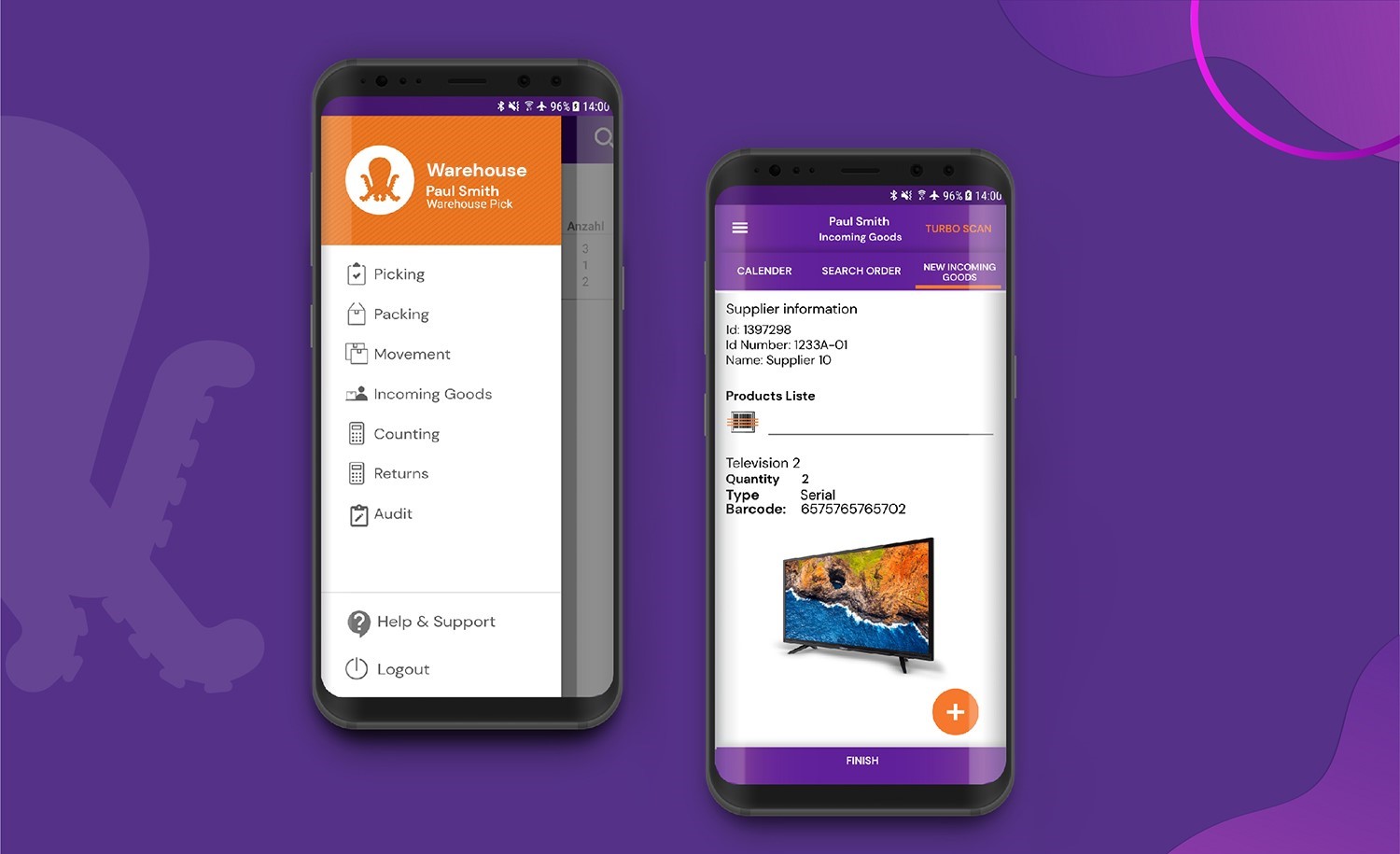
A WMS should help warehouse workers move faster, not slow them down with complicated screens or confusing workflows. PULPO WMS uses an intuitive native Android app that guides employees step by step through receiving, putaway, picking, packing, shipping, and other daily warehouse operations.
Employees can use Android devices with integrated barcode scanners or mobile scanning devices to complete tasks directly on the warehouse floor. This reduces training time and makes warehouse processes easier to follow, especially for new employees, seasonal teams, and fast-growing operations.
Instead of relying on paper lists, manual instructions, or verbal explanations, employees receive clear digital tasks through the app. They know where to go, what to scan, which item to pick, and what to do next. The result is faster onboarding, fewer errors, and better control over warehouse execution.
Inventory Tracking and Real-Time Visibility
A WMS creates transparency by connecting inventory data with actual warehouse activity. The system knows where products are located, how many units are available, and which tasks are currently in progress.
With PULPO WMS, employees are guided to the right storage location and the correct product through the mobile app. Barcode scanning helps verify every movement and reduces the risk of manual mistakes.
Through a modern API, warehouse inventory can be synchronized in real time with ERP systems, eCommerce platforms, transportation management software, and other business systems. This gives teams real time visibility into inventory levels, stock movements, and fulfillment status.
Real-time inventory visibility helps businesses improve inventory accuracy, reduce manual stock corrections, avoid overselling, speed up order fulfillment, improve customer and supplier relationships, and control daily warehouse operations with more confidence.
Labor Management and Warehouse Performance
Warehouse performance depends not only on inventory and systems, but also on how efficiently people can complete their tasks. A WMS supports labor management by assigning tasks clearly, reducing unnecessary walking, and giving warehouse managers better insight into daily productivity.
Instead of manually deciding who should do what, the system helps organize work based on warehouse processes, order priorities, and operational needs. This helps teams streamline warehouse operations while improving speed, accuracy, and accountability.
With the PULPO WMS Analytics Suite, businesses can access valuable warehouse data and business intelligence dashboards. These insights help teams identify bottlenecks, measure warehouse performance, improve labor management, and make better decisions about staffing, layout, process improvements, and order fulfillment capacity.
Managers can better understand how many orders are processed, how long picking and packing tasks take, which workflows cause delays, where errors happen most often, how warehouse workers perform across different tasks, and how to reduce warehouse operating costs.
ERP Systems and Enterprise Resource Planning Integration
A WMS becomes even more powerful when it connects smoothly with your wider business infrastructure. Many companies already use enterprise resource planning software to manage purchasing, accounting, sales, inventory records, and customer data.
However, ERP systems are usually not designed to guide warehouse workers through physical warehouse tasks in detail. That is where a WMS adds value.
The ERP remains the central business system, while the WMS manages daily warehouse execution. Together, they create a more connected flow between order management, inventory movements, supply chain management, and fulfillment operations.
PULPO WMS can integrate with ERP systems, eCommerce platforms, sales channels, and other supply chain systems through a modern, open API. This helps companies reduce manual data entry, avoid duplicate work, improve integration capabilities, and streamline warehouse operations from order receipt to shipping.
Operational Efficiency Across Inbound and Outbound Logistics
A modern WMS improves operational efficiency by bringing structure to both inbound and outbound logistics. In inbound operations, the system helps teams receive goods, check quantities, scan products, assign storage locations, and update inventory data.
In outbound operations, it supports picking, packing, shipping, and order completion. By connecting inbound and outbound operations in one system, a WMS helps businesses reduce delays, improve accuracy, and create more reliable supply chain processes.
This is especially important for companies with high order volumes, multiple warehouses, complex warehouse workflows, many SKUs, seasonal peaks, several sales channels, strict delivery expectations, and fast-moving inventory.
Cloud Based WMS vs Legacy Warehouse Systems
Traditional warehouse systems often require expensive hardware, long implementation projects, and heavy consulting support. They may also be difficult to update, customize, or connect with modern eCommerce and supply chain platforms.
A cloud based WMS offers a more flexible and scalable alternative. Cloud-based WMS solutions are hosted and maintained by the provider, which means companies benefit from faster setup, easier updates, and more predictable costs.
Cloud-based warehouse management systems also make it easier to keep warehouse devices, integrations, and workflows up to date. For many growing eCommerce, 3PL, and fulfillment businesses, a cloud based WMS offers a more practical path than traditional on-premise solutions.
Standalone WMS or Advanced WMS Platform?
When comparing WMS solutions, businesses should understand the difference between a basic standalone WMS and an advanced WMS platform.
A standalone WMS usually focuses on core warehouse tasks such as receiving, storage, picking, packing, and shipping. This can be useful for companies that need a dedicated system for warehouse execution.
Advanced WMS platforms go further. They combine warehouse execution with real-time tracking, analytics, automation technologies, integration capabilities, and deeper visibility across supply chain operations.
The right choice depends on your business model, order volume, warehouse complexity, and growth plans. For businesses that want to scale, connect multiple systems, improve warehouse performance, and create more automated workflows, an advanced WMS platform can provide stronger long-term value.
How to Compare WMS Providers
User Friendliness
Warehouse software should not be overly complicated. Many systems are powerful on paper but difficult to use in real warehouse environments. A user-friendly WMS should make work easier for warehouse workers, not create additional friction.
An intuitive native Android app is often more practical than browser-based apps because it supports faster scanning, clearer workflows, and shorter training periods. The easier the system is to use, the faster your team can adopt it.
Integration Capabilities
Integration is one of the most important factors when selecting a WMS. Your WMS should connect smoothly with ERP systems, eCommerce platforms, marketplaces, shipping tools, transportation management, and other supply chain systems.
Before choosing a provider, check how flexible and future-ready the integrations are. A modern, open API gives your business more freedom as your technology stack changes.
Scalability for Multiple Warehouses
If your business operates or plans to operate multiple warehouses, your WMS should support that growth. Managing multiple warehouses requires accurate inventory data, clear warehouse locations, real-time inventory visibility, and centralized control.
A scalable WMS helps businesses manage stock, orders, and workflows across different sites without losing transparency.
Real-Time Warehouse Data
A modern WMS should provide real-time warehouse data that helps teams make better operational decisions. This includes inventory levels, order status, task progress, warehouse performance, and process bottlenecks.
Without accurate data, warehouse managers are forced to make decisions based on assumptions. With real-time visibility, teams can react faster and control daily warehouse operations more effectively.
Hidden Costs with Legacy Providers
Some legacy warehouse management systems come with hidden costs, including hardware requirements, long implementation timelines, expensive consulting, and complex maintenance.
Cloud-based WMS solutions offer a more transparent and flexible model. They help businesses avoid unnecessary infrastructure costs while keeping the system updated and scalable.
WMS and the Wider Supply Chain
A WMS does not work in isolation. It plays an important role in wider supply chain management by connecting warehouse execution with order fulfillment, inventory control, purchasing, shipping, and customer service.
While transportation management systems and transportation management software focus on planning, optimizing, and managing the movement of goods between locations, a WMS focuses on what happens inside the warehouse.
Together with ERP systems, transportation management, and other supply chain systems, a WMS helps businesses create smoother end-to-end supply chain operations.
These Are the Advantages of a Modern WMS
Final Takeaway
A WMS is more than warehouse software. It is the operational foundation that connects inventory, people, processes, systems, and data.
For companies that want to improve inventory management, streamline warehouse operations, increase order fulfillment speed, and gain real-time visibility, a modern WMS can make a measurable difference.
With PULPO WMS, businesses can create a digital twin of their warehouse, guide employees through daily tasks with an intuitive Android app, connect warehouse operations with ERP and eCommerce systems, and use real warehouse data to improve performance.
The result is a smarter, more transparent, and more scalable way to manage warehouse operations.